
Monitoring of waterproofing and structural moisture protection: The limits of point measurement methods and the need for innovative approaches
This is mainly due to the fact that monitoring methods based on discrete, distributed measuring points are often not representative of the entire monitoring area due to the low density of measuring points. Especially in the case of events such as leaks, cracks or other unexpected damage, the occurrence of which cannot be clearly predicted, punctual measurements can have difficulty locating them in time and accurately.
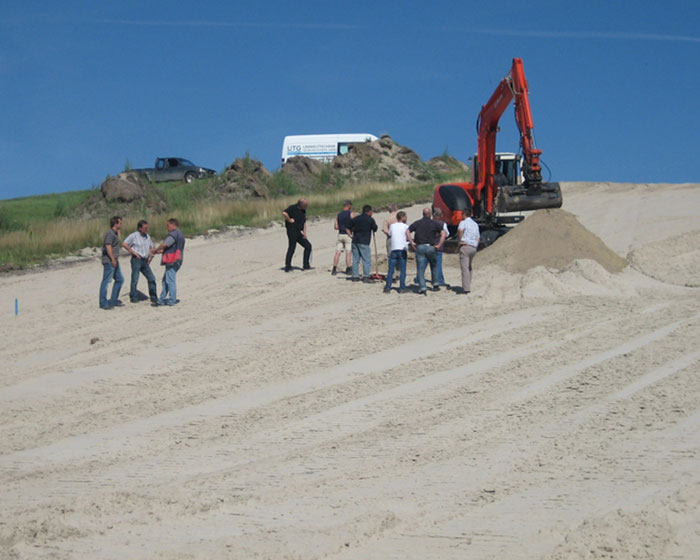
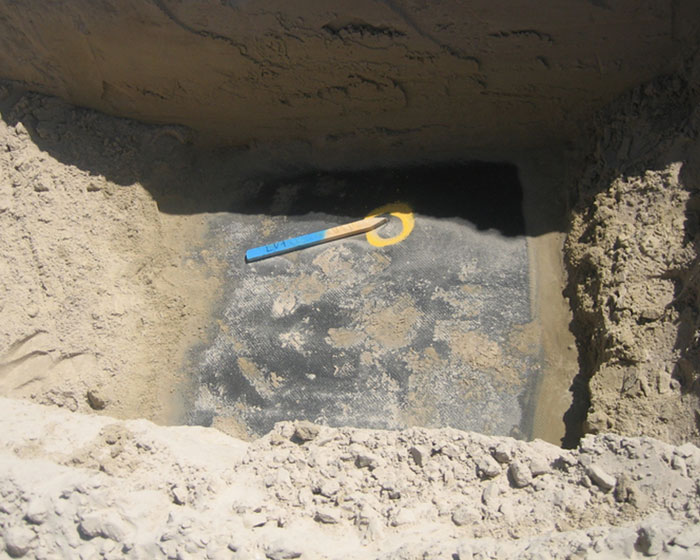
The following practical examples illustrate the effectiveness of this approach:
Monitoring of buried plastic seals
The metrological monitoring of buried waterproofing in the environmental protection sector is made possible by the BAM-approved geologger® seal control system. This system is based on an areal recording of the electrical resistance distribution of the monitored sealing. It uses a voltage difference imprinted in the electrically conductive soil layers adjacent to the waterproofing and records the potential distribution that occurs with a grid of measuring points in one of the soil layers.
Thanks to a measuring grid of 5 to 10 metres, which is usually used in practice, the smallest leaks can be located with an accuracy of a few decimetres, regardless of where they occur. This process is now state-of-the-art and is mandatory for certain landfill classes and facilities for handling water-polluting substances.
Real-time monitoring of building waterproofing
The metrological monitoring of green and used flat roofs is implemented by means of the real-time monitoring system smartex mx®, which enables continuous recording of the entire roof area. This system works according to the same measuring principle as the geologger® system, whereby the voltage difference between the wet cover or wear layers is applied to the waterproofing and an electrically conductive contact layer located below the waterproofing.

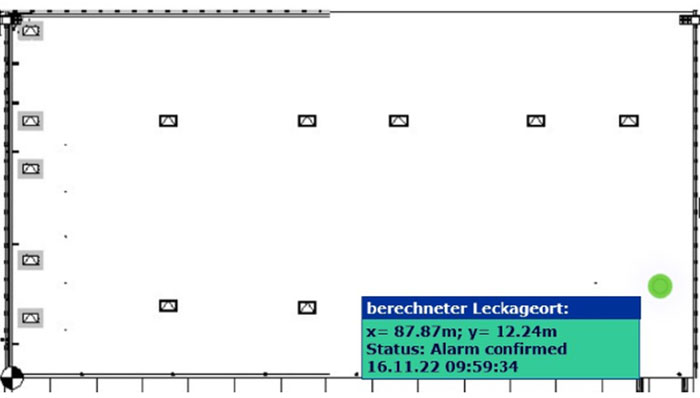
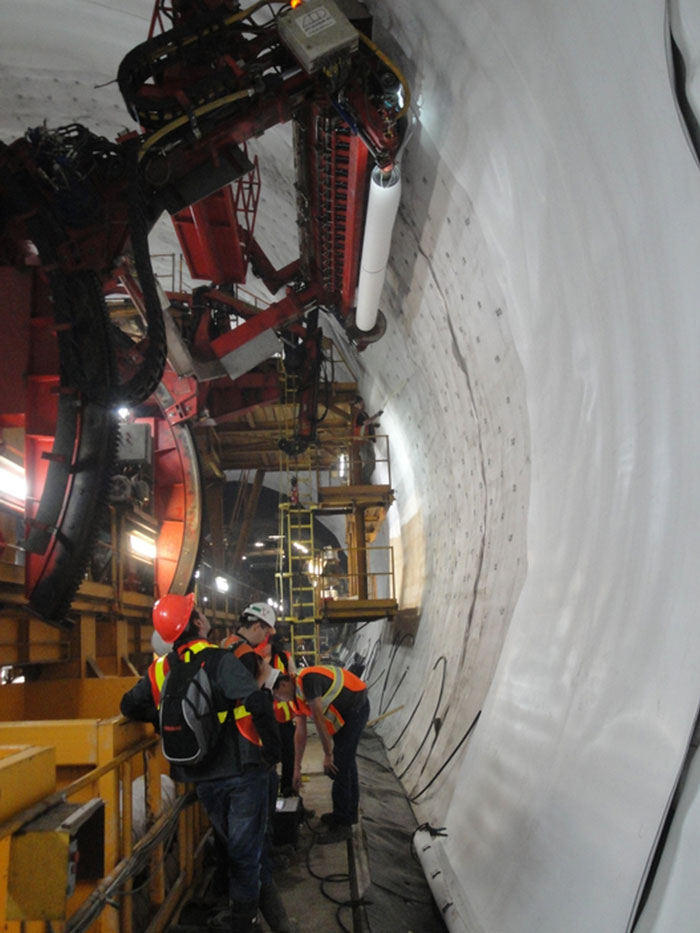
smartex® mx is available in various design variants and is suitable for use with loosely laid, mechanically fastened and fully hot-glued or self-bonded seals.